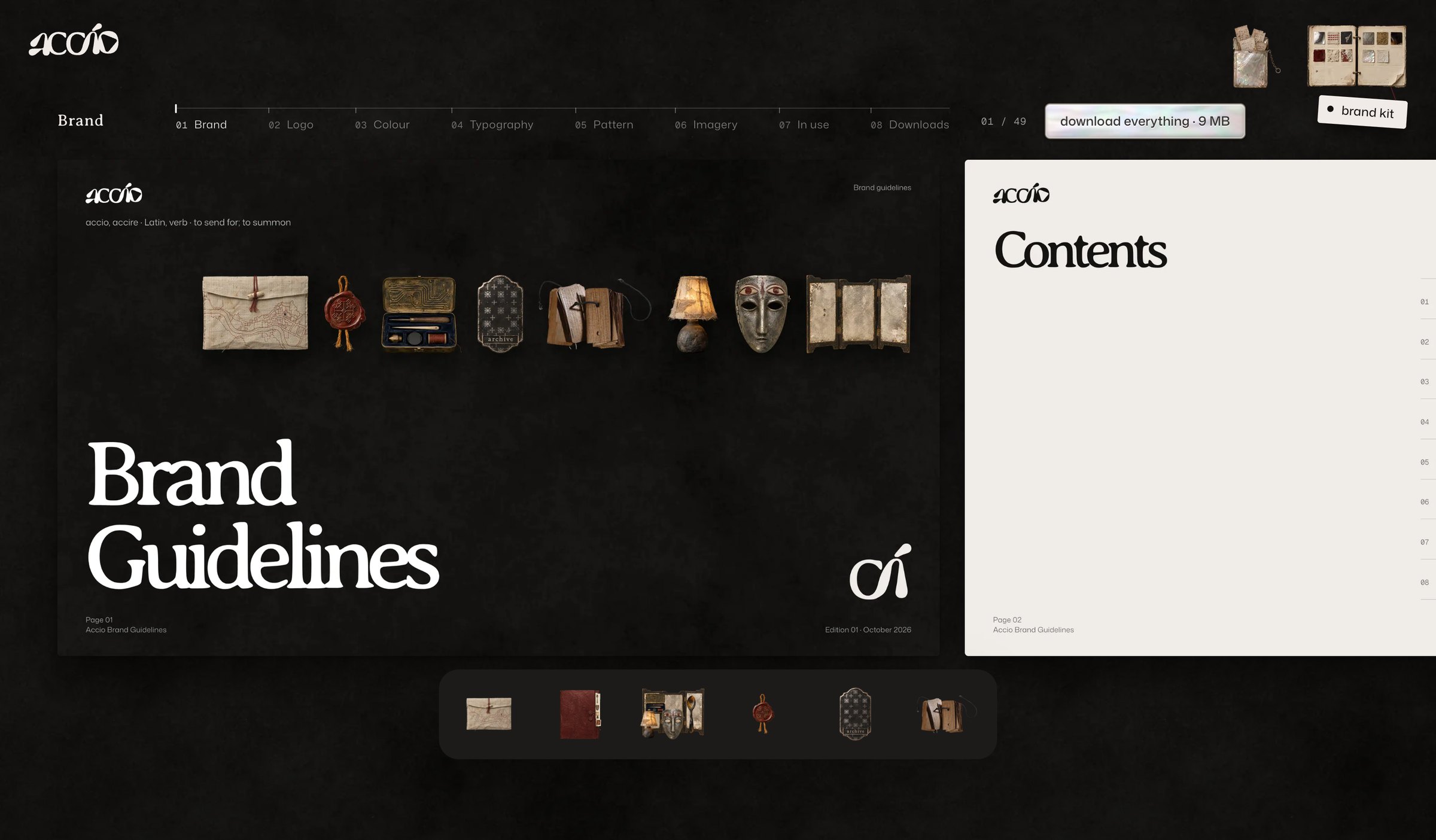
accio, accire · Latin, verb · to send for; to summon
Brand
Guidelines
Three ideas
Everything in this book follows from these. When a decision isn’t covered here, go back to them.
Quiet frame, loud objects
The frame is black, white and parchment, set in one face. The objects inside it carry the colour, the metal and the thread.
Craft was computation first
Bidri inlay and Kasuti stitches are counted, charted and repeated. The patterns here come from the same rules.
Nothing is staged
Generated images may show texture and form, never a person, an event or a venue. The archive is the proof of work.
Wordmark and icon
The wordmark is the name, drawn in lowercase. It leads wherever there is room: headers, covers, signage.
The icon mark is the cí from the wordmark, standing on its own, for anything square or small: avatars, favicons, stamps.
Always use the supplied artwork; never retype the name.
Colour versions
One colour per mark: oxide on light grounds, parchment on dark ones, parchment on madder. Never two colours at once.
Clear space and size
Keep clear space equal to the height of the accent over the í on every side. Nothing enters it.
Smallest sizes: the icon mark 24 px tall, the wordmark 96 px wide; 8 mm and 25 mm in print.
Don’t
The logo only works if it is always the same. These are the common ways it stops being the same.
Primary
Black, white, parchment and madder. The bar below is the proportion: grounds carry the page, madder is the one accent.
The one black. Blackened alloy; the dark ground.
The one white. Paper, screens, the studio.
Undyed cloth; the warm light ground.
The signature. Actions and the live badge.
Secondary
Indigo is thread; rust is the one warning. Oxblood, ochre, verdigris and stone are the image world: illustration and imagery, never a button or a ground.
Silver and rose brass are metals. They are rendered by the material engine, never filled flat. Tints are mixed from the grounds, for panels and lines.
Thread. Links and focus.
Errors. Never the accent.
Lacquer and leather bindings.
Earth pigment.
Patina on old metal.
Plaster and undyed wool.
Metal. Inlay only.
Metal. Inlay only.
Extended palette
Every hue as a ramp of eleven shades, so an interface has the tints and darks it needs without inventing any. The base colour sits on its own step, marked •.
Shades are even in lightness (OKLCH); tints lose chroma the way dye does in a lighter bath.
Pairings
Text and ground pairs that pass WCAG AA at body size. Colour never sets running text on its own; it sits on a ground.
18.7:1 · AAA
15.8:1 · AAA
18.7:1 · AAA
11.2:1 · AAA
13.4:1 · AAA
11.2:1 · AAA
Accio Sans
Accio Sans sets everything that isn’t a headline: subheadings, body, captions and labels. It is Mona Sans by GitHub, designed with Degarism, renamed for Accio under the SIL Open Font License.
Text is set at width 105. Weights run from 200 to 900.
ABCDEFGHIJKLMNOPQRSTUVWXYZ
abcdefghijklmnopqrstuvwxyz
0123456789 · & ! ? @ — “ ” ₹ €
Averia Serif Libre
The display face: hero and display headlines. Regular, tracked −11%, in parchment on dark grounds.
By Dan Sayers, under the SIL Open Font License. It is used exactly as published, under its own name: its licence reserves “Averia”.
Craft, extended
ABCDEFGHIJKLMNOPQRSTUVWXYZ abcdefghijklmnopqrstuvwxyz 0123456789
Weights
Accio Sans, 200 to 900. Emphasis is weight, never italic. Headlines stay light; labels and captions get heavier as they get smaller.
Hierarchy
Every size sits on a 4 px grid. Hero and display are Averia Serif Libre; everything else is Accio Sans. Sizes, weights and faces are tokens: copy them from the Tokens page, never by eye.
Geist Mono
The machine register. Human-written text is proportional; anything a machine writes — codes, seeds, coordinates, timestamps — is mono.
Geist Mono by Vercel, SIL Open Font License.
Seedaccio
Symbolbotanical-v4.1
Where17.9133° N, 77.5301° E
When2026-12-14T18:30+05:30
How a pattern is made
Type any word: an event, a city, a name. Each letter is a motif from Accio’s alphabet, and the word decides which motifs, in what order, in what layout.
The same word always makes the same pattern. Change one letter and one motif changes.
accio
carnation · palmette scrolls · round bead
The alphabet
Twenty-six letters and ten numerals, each one a motif: palmette, bud, carnation, daisy and on to the chevron shield. Numerals are beaded rings holding that many dots.
Drawn by igochi studio after Bidri inlay, and inlaid exactly as drawn.
The alphabet, stitched
Thread reads the same drawings as a counted chart and outlines them hole to hole, the way Kasuti is worked.
Metal follows the drawing; only thread counts.
Word symbol
A word also grows a single ornament: a crown, a pair of branches and a base, each picked from the alphabet’s drawings by the word itself.
576 combinations. Different words can share one; the symbol is a signature, not a code.
Borders
A row of the word’s motifs between a wire rule and a bead row. Borders run along edges: the foot of a page, a card, a banner, the site.
Brass and madder thread here; any finish works.
Finishes
Every pattern can take any finish. Metal is for what has happened: inlaid, permanent. Thread is for what is coming; a first pass of stitches means it hasn’t happened yet.
Emboss is relief without ink. Flat is one colour, for small sizes, print and photocopiers.
Grounds
Patterns sit on one of four grounds, each a seeded texture: paper, cloth, alloy and pigment. They tile seamlessly and never shift the colour under them.
Exported as tiles and CSS by pnpm tokens.
The image world
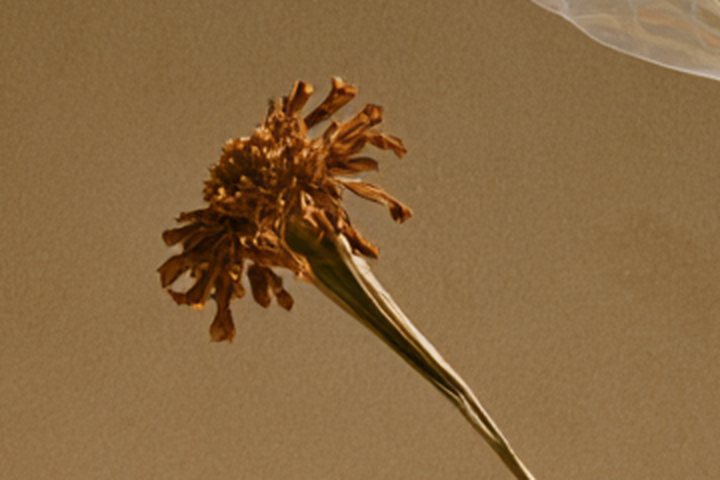
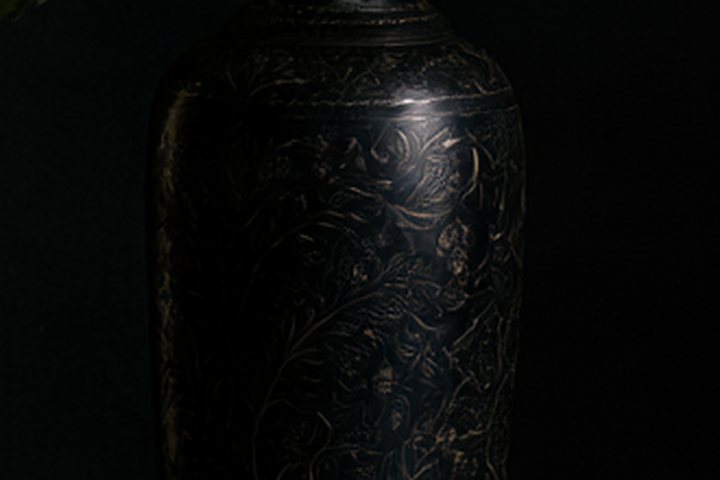
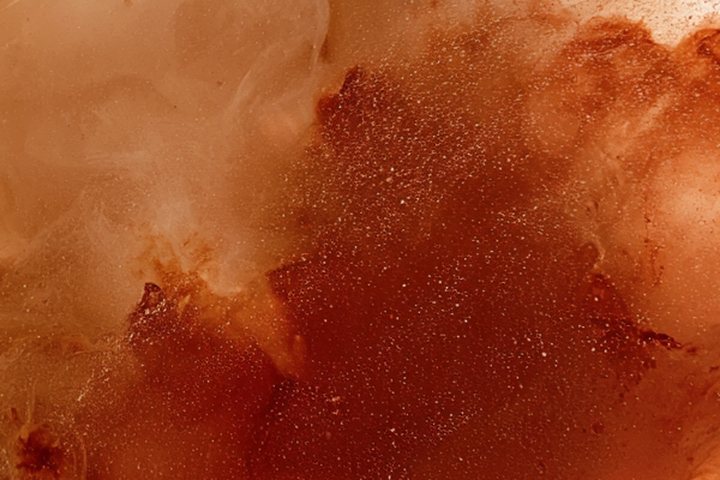
Objects, materials and light in a quiet room: one warm low sun, plaster and stone, glass and sheer cloth, one red at most.
This is the reference for every picture Accio makes or chooses. Generated pictures set the mood; they never stand in for an event, a venue, a partner or a person.
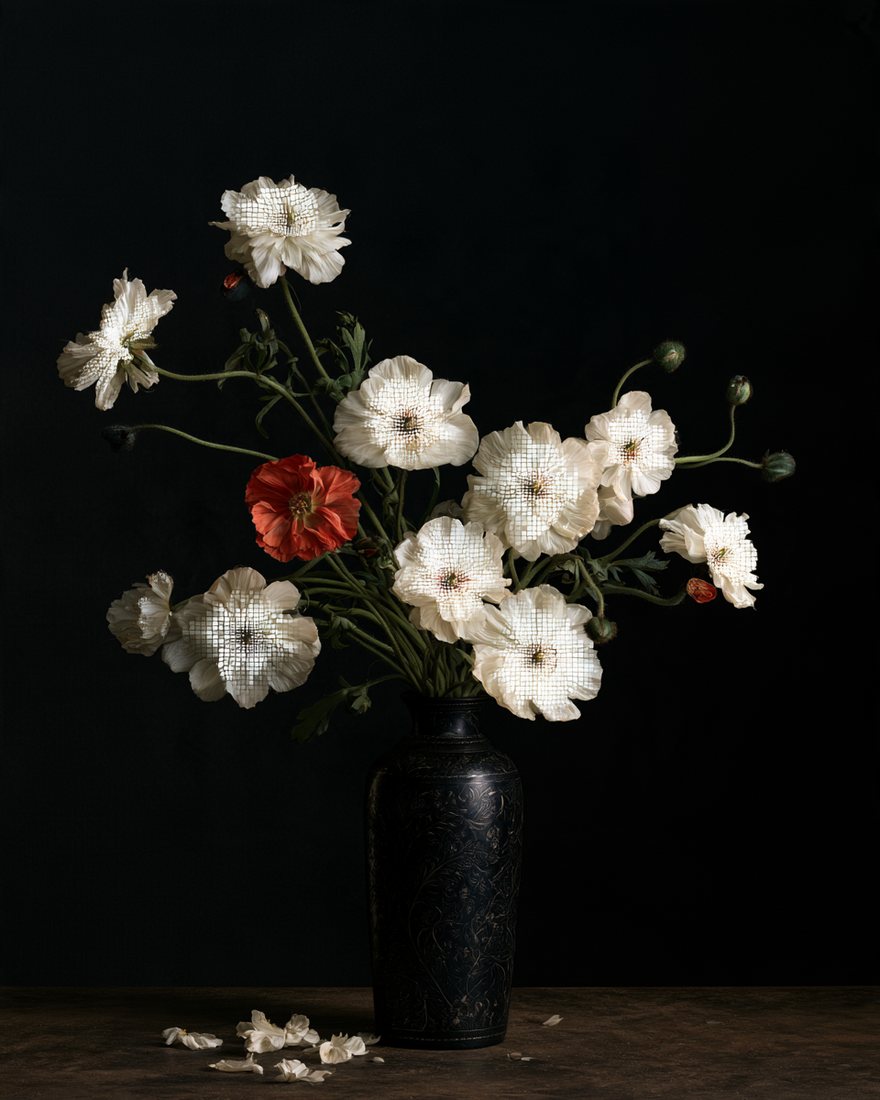
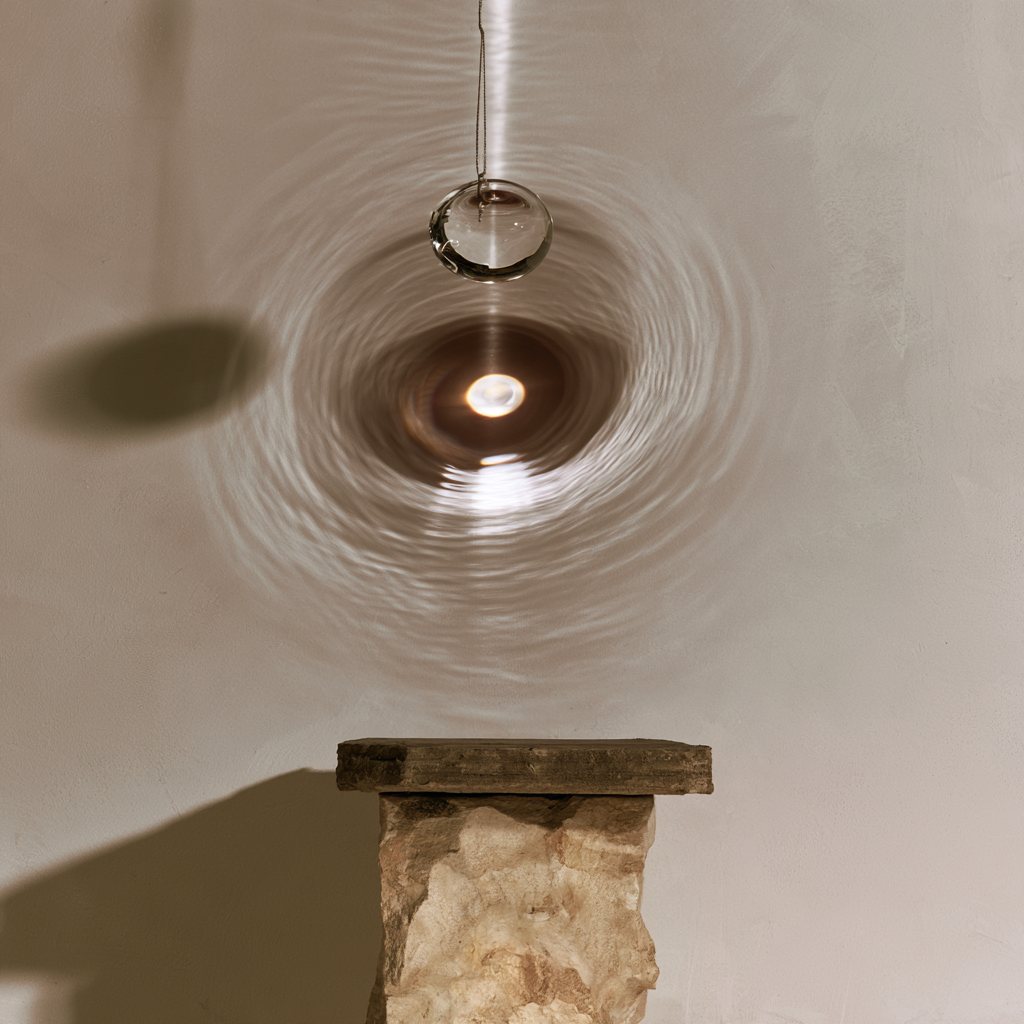
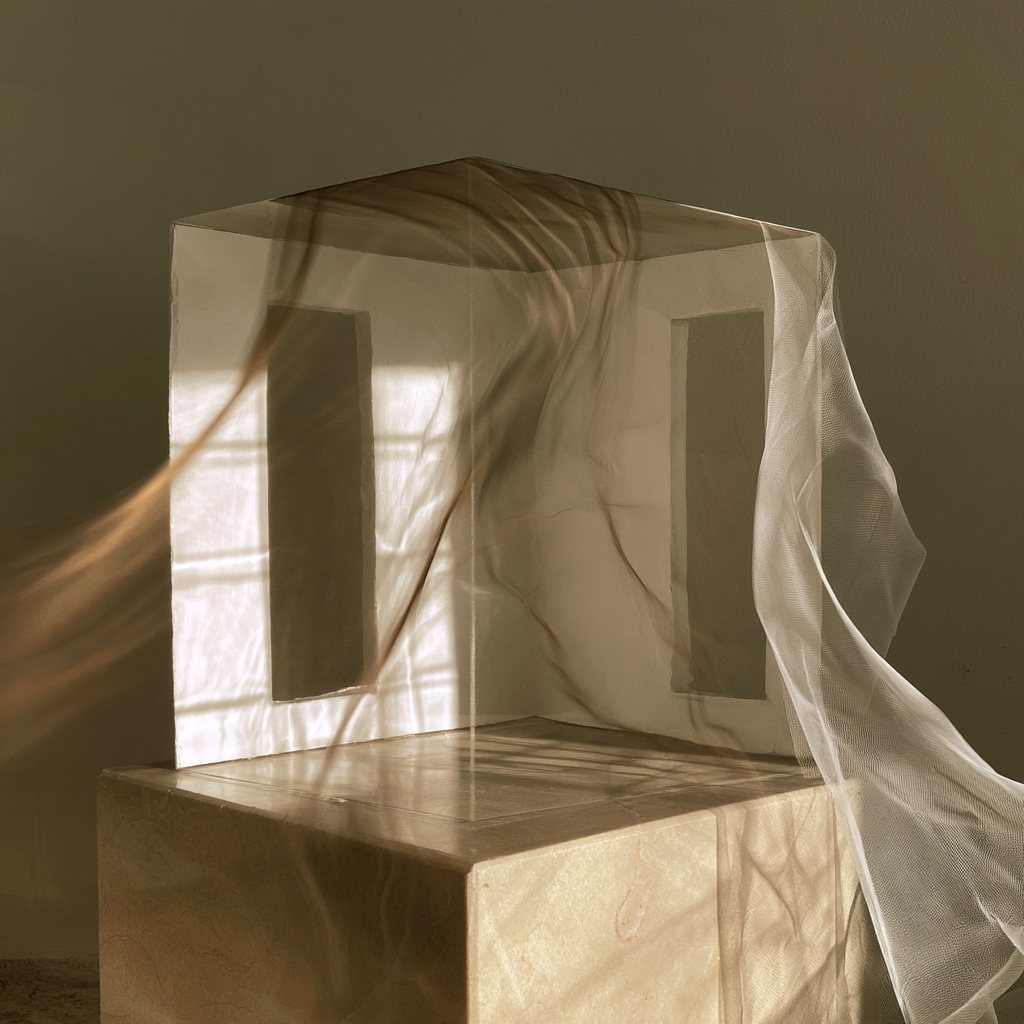
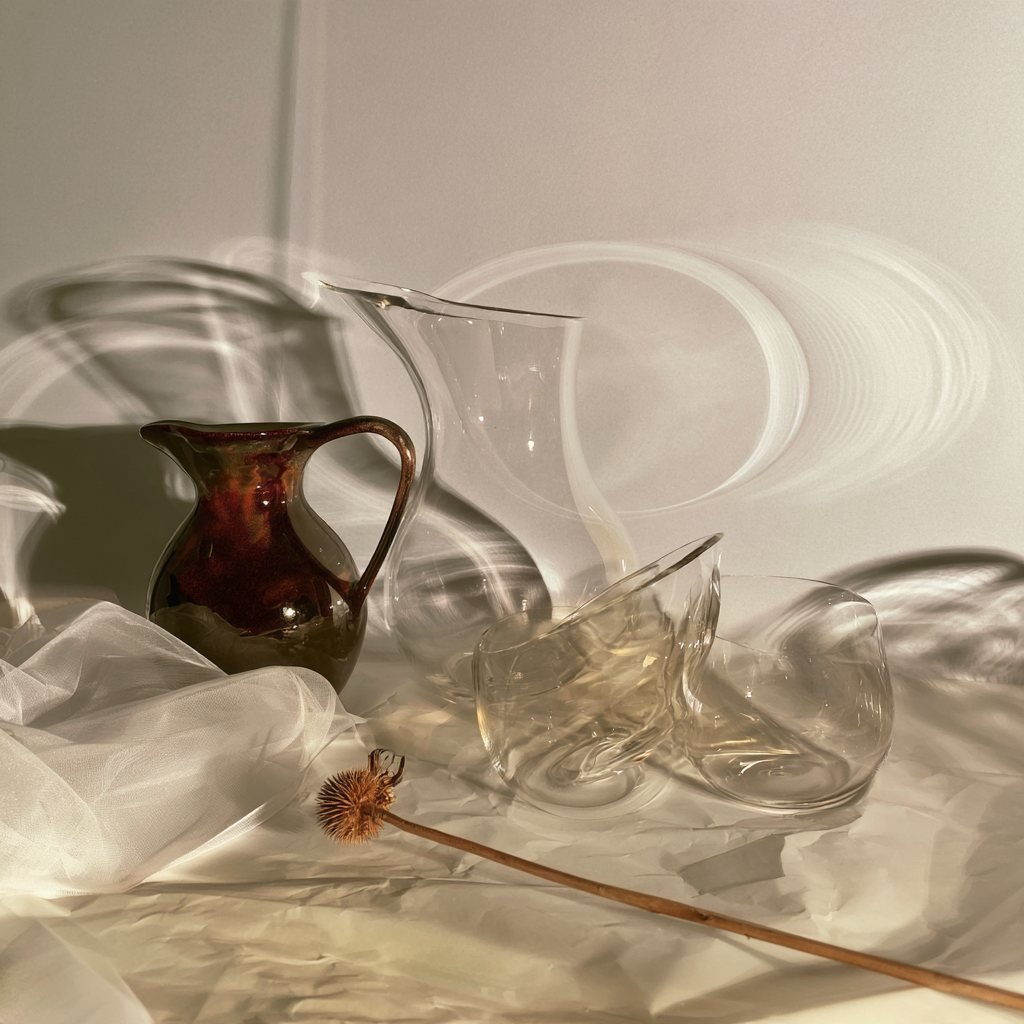
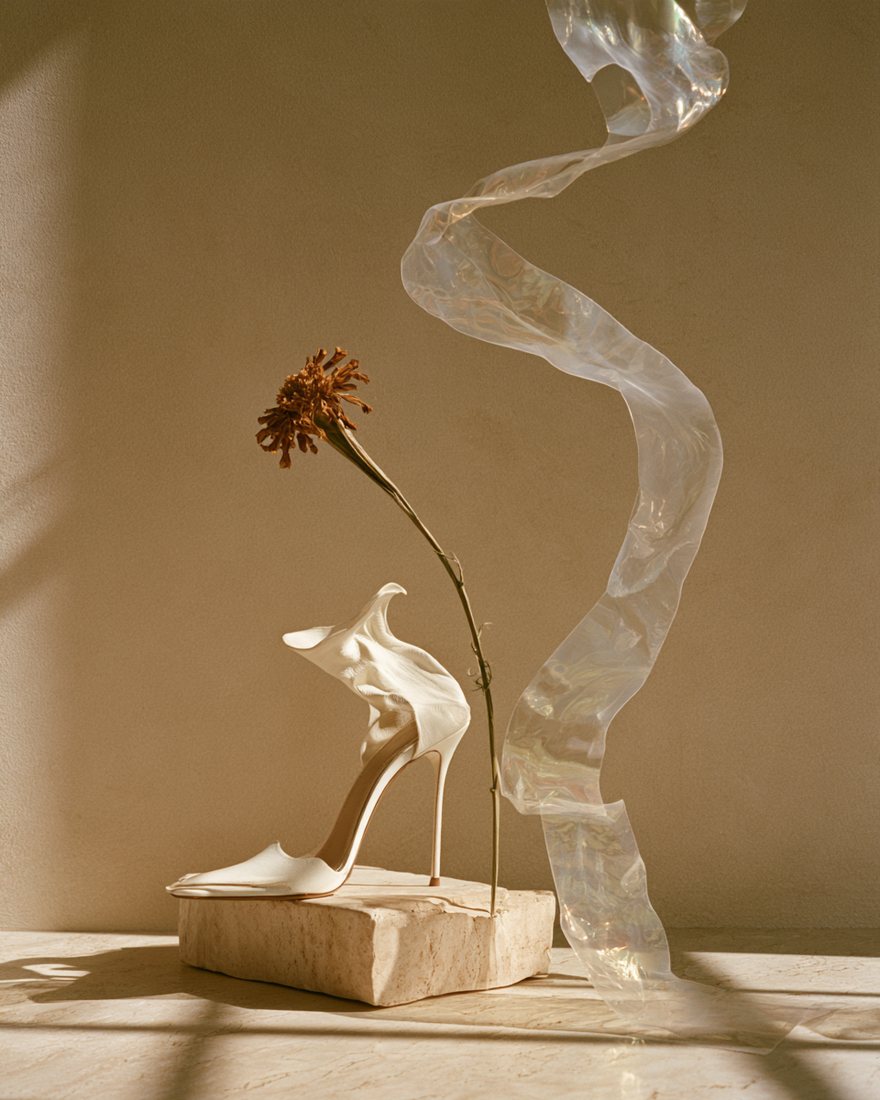
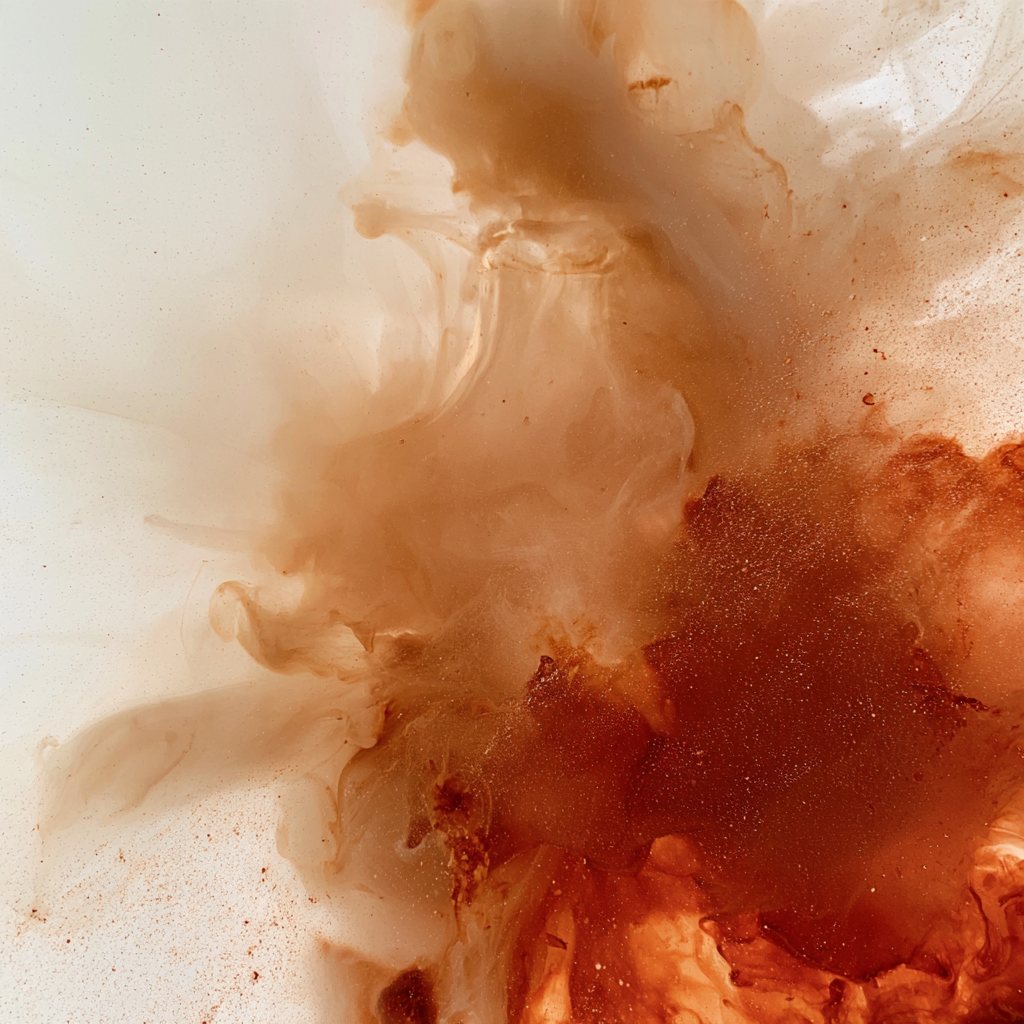
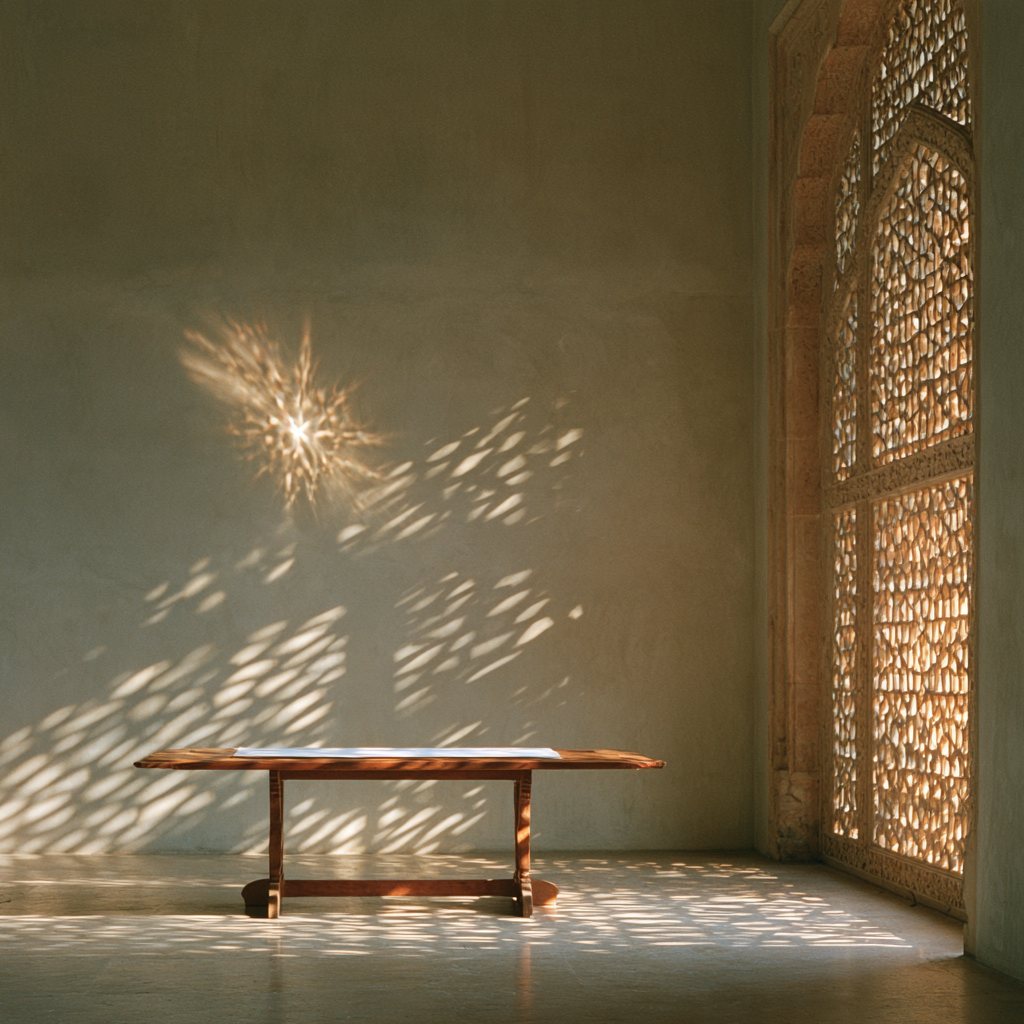
Made by the studio with Midjourney, from the owner’s board. Board image 07, a figure, is held back pending the owner’s decision under the honesty rules.
Light
One light, low and warm, from the side, like late sun through a window. It passes through something before it lands.
Haze only as a single shaft in a dark room, never as fog or smoke.
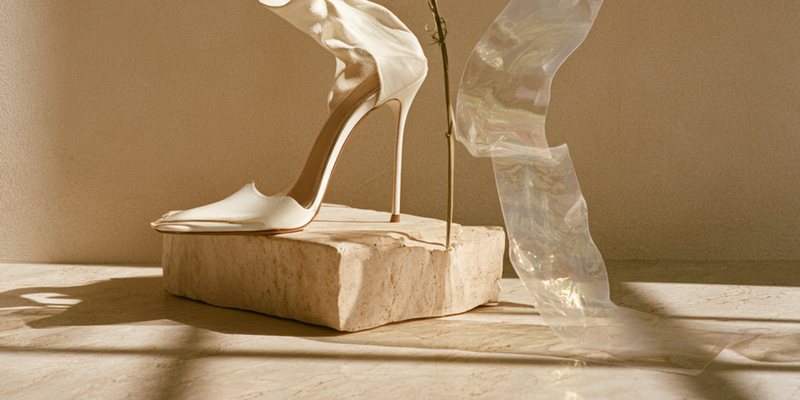
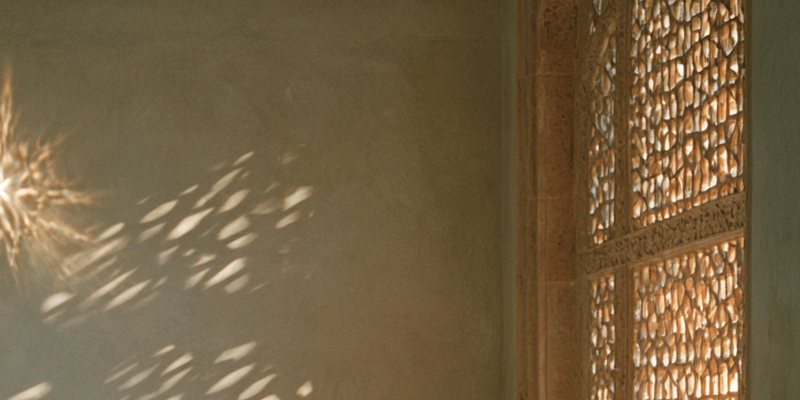
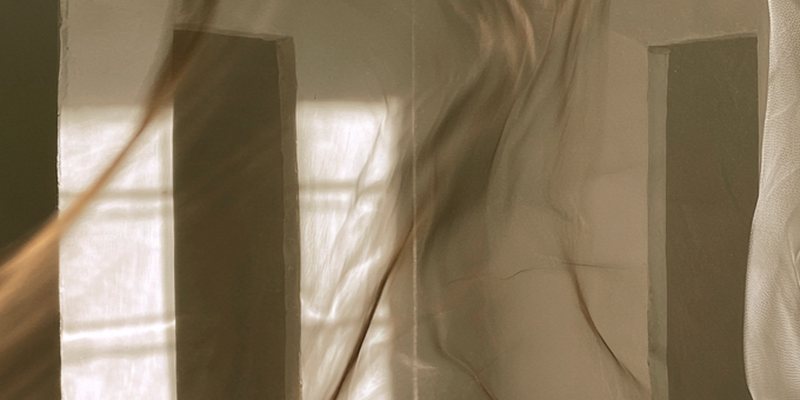
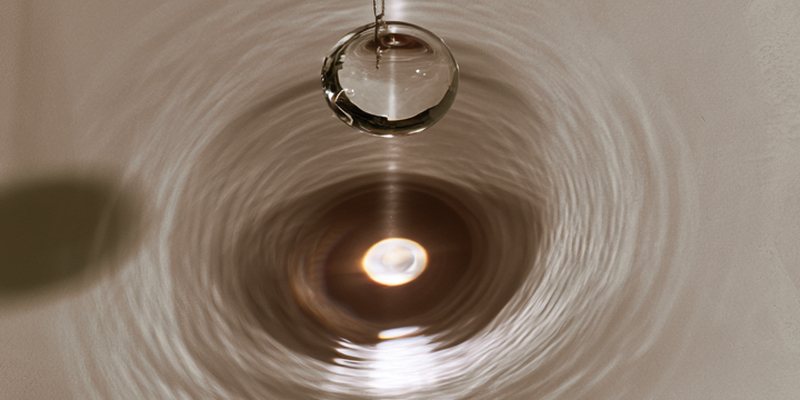
Material
Natural materials, matte and a little worn, on a plinth or a plain table.
The modern thing in the picture is clear and bends light: a glass lens, an acrylic case, an iridescent film. A machine trace, like the counted grid on the poppies, sits inside a natural object, once per picture at most.
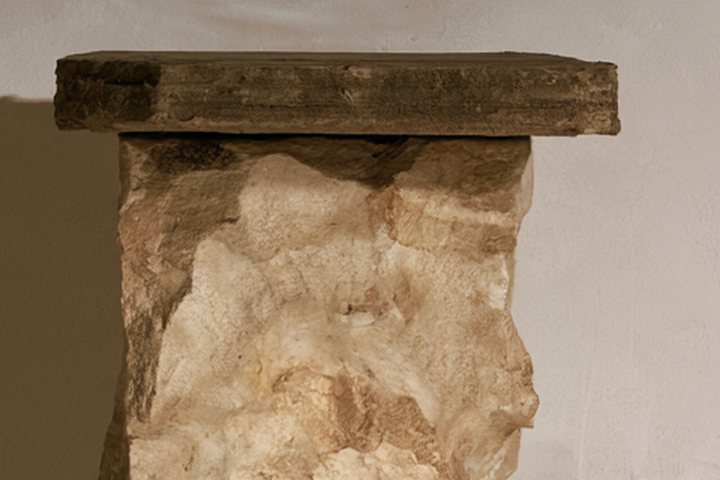
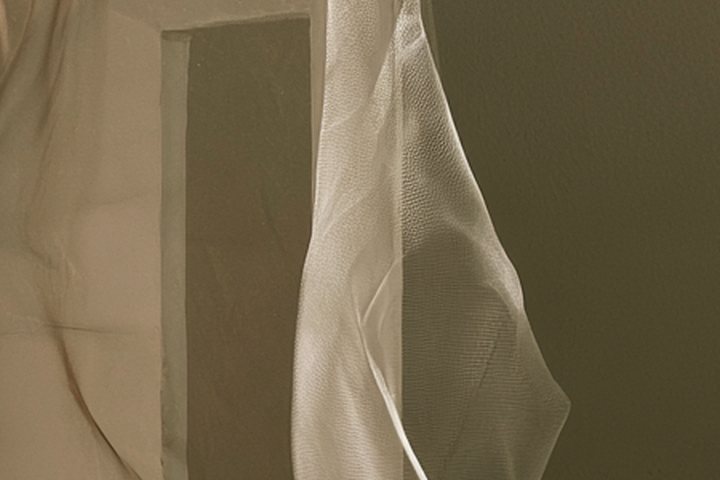
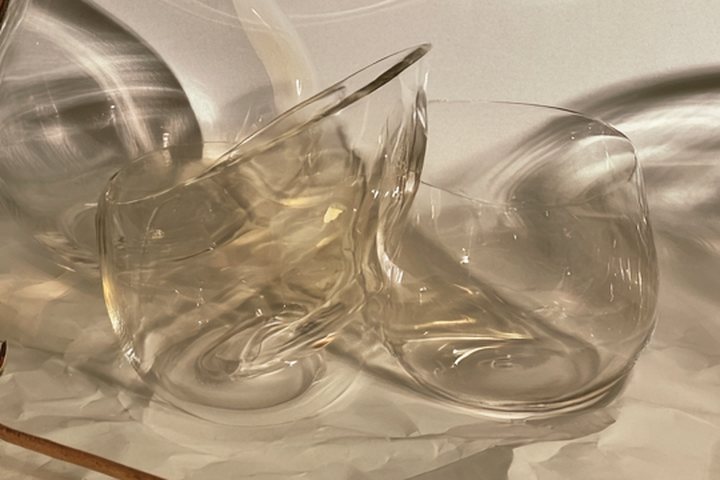
Framing
Square or portrait, 1:1 or 4:5. One subject, or a few things in a still life.
Motion is caught mid-air: cloth lifting, a ribbon turning, pigment spreading. In a loop only that one thing moves, slowly.
Matte, with film grain and soft focus fall-off. No gloss, no rendered sharpness, no lens flare.
Palette from the images
Colours sampled from the board, each matched to the nearest Accio token. Under 0.05 apart reads as the same colour.
The pictures run from parchment through stone and ochre to umber shadow. Madder never appears in them; it stays the action colour.
The lit poppy is the one saturated red. It has no token and stays inside the picture.
Making new images
Start from this block in Midjourney. Fill the brackets, and add two or three board images as style references with --sref.
Keep a picture only if it passes every line on this page, and log it in the sources ledger: made by the studio with Midjourney, the prompt, the date, where it is used.
still life photograph, [one object] on a rough limestone plinth, bare lime-plaster wall, one low warm sun from the left through [a jali screen | a window | sheer voile], long soft shadows, [caustic rings of light from glass], matte surfaces, parchment, stone and ochre with umber shadows, [one red accent], empty space above the object, 35mm film, fine grain, soft focus fall-off, natural light only
--ar 4:5
--style raw
--no people, face, hands, text, logo, signage, screen, neon, blue light, gloss, CGI, clutter
Do
- One low warm light from the side
- Light through a jali, a window or voile
- Plaster, stone, glass, sheer cloth, dried flowers
- One object on a plinth, with air above it
- At most one saturated red
- Film grain, matte surfaces
Don’t
- People, faces or hands
- Screens, devices, logos, text
- Neon, blue or coloured light
- Gloss, lens flare, rendered sharpness
- Clutter, or anything that reads as a real venue
- Temple motifs
Event photographs
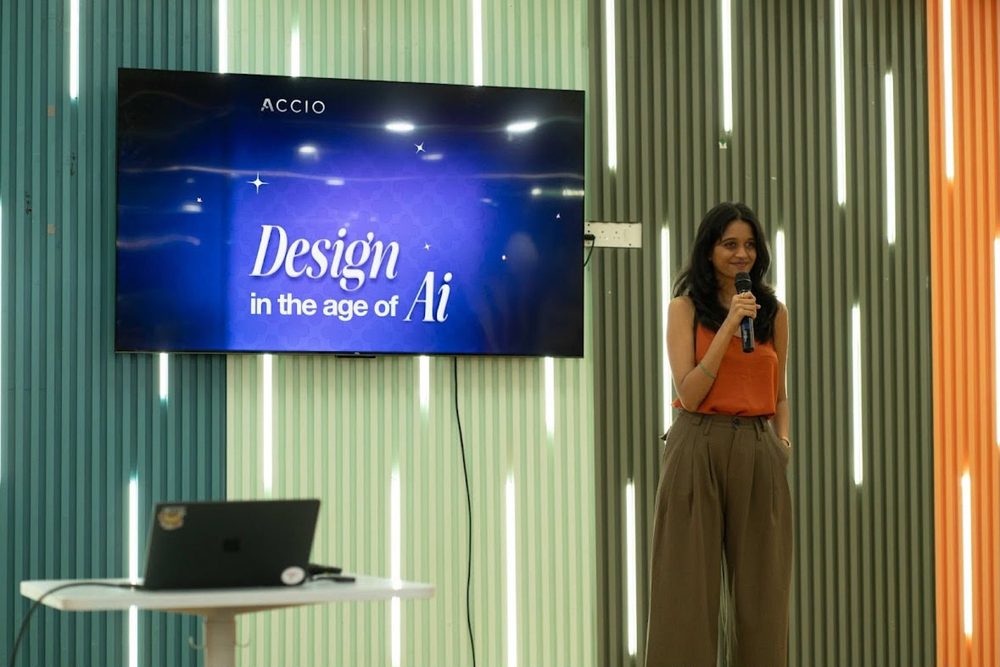
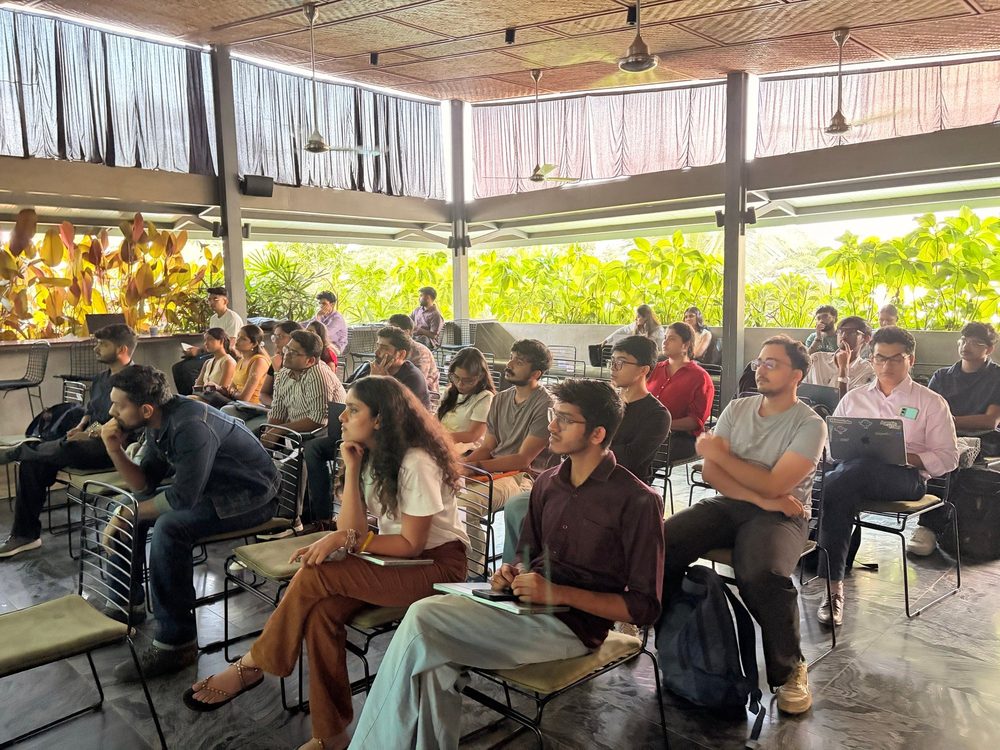
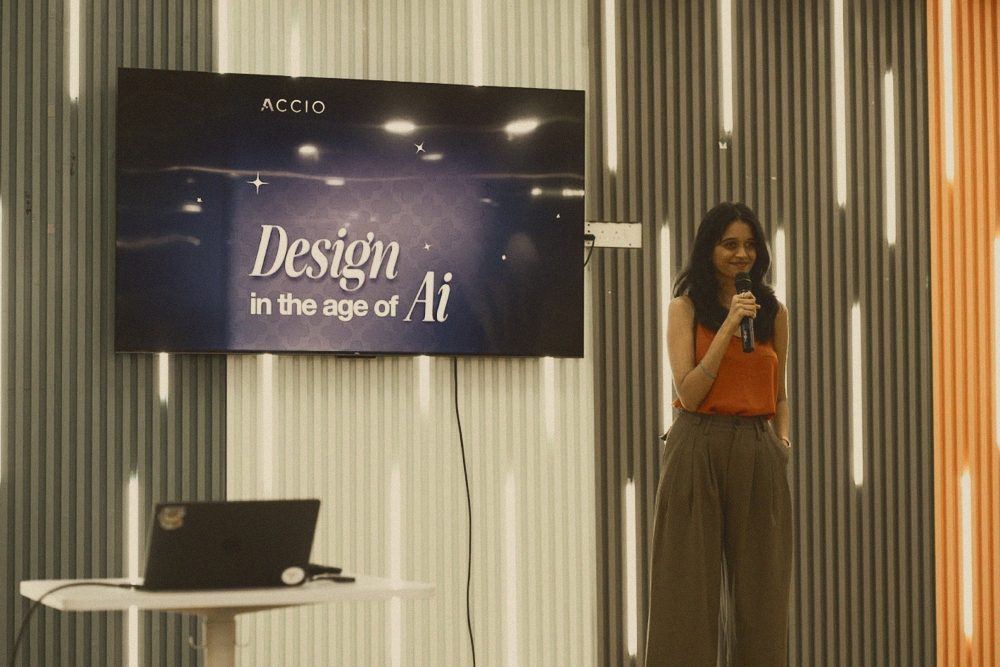
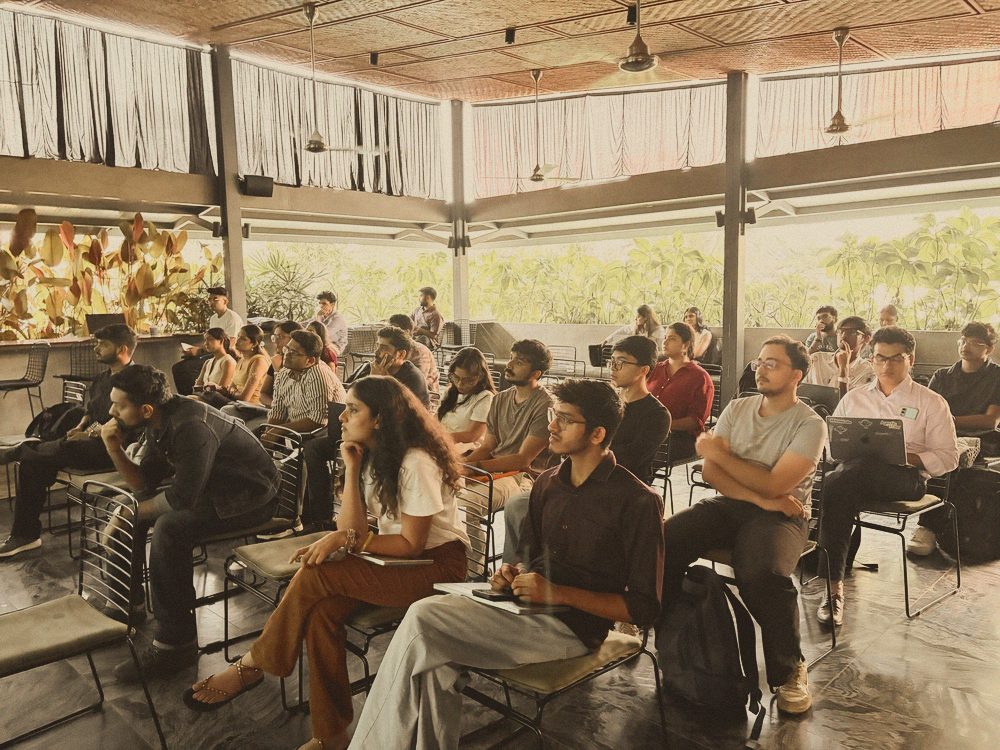
Real events are shown only in real photographs. Every one goes through the site’s house grade: colour pulled out except reds and rusts, shadows lifted to umber, mid-tones to sand, highlights stopped at cream, a fine grain.
Nothing else is done to them: no retouching, no people added or removed, no generated fill.
Caption each with the event and date, and credit it: [Event] · [Date] · Photo: Accio.
The objects
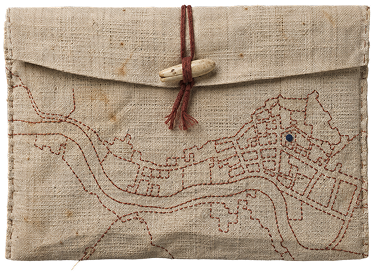
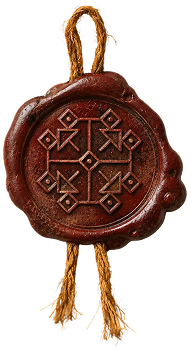
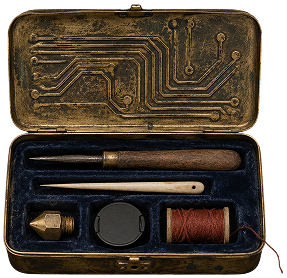
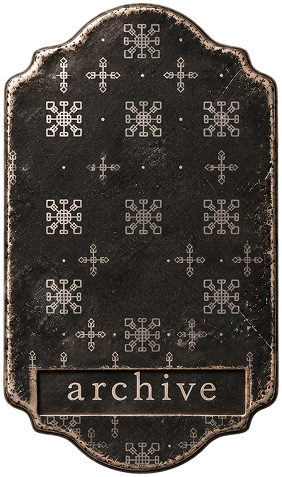
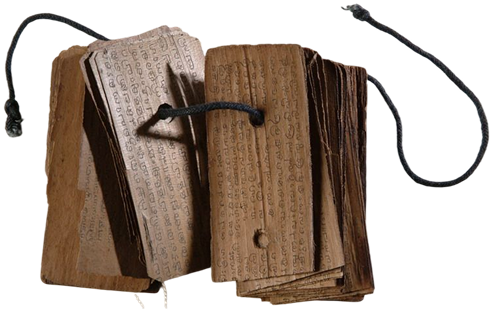
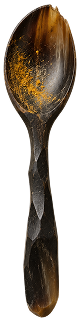
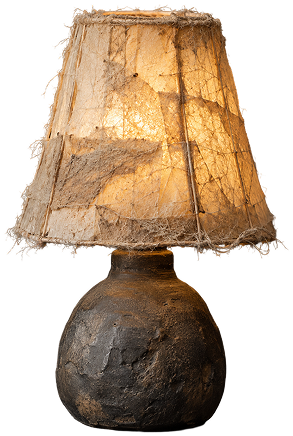
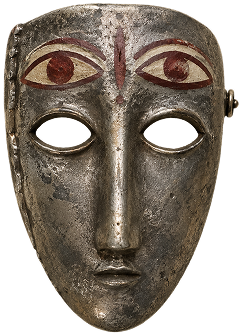
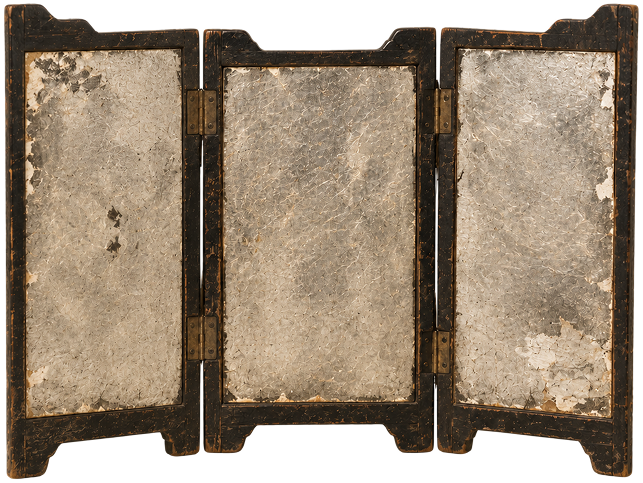
Every room of the site is an object on a table. They are made, not photographed, and each is set down on the same alloy ground under the same light.
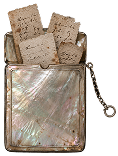
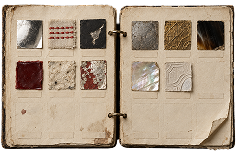
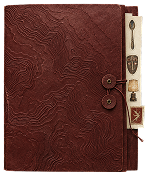
What images may show
Accio’s archive is its proof of work. A fabricated photo of an event is worse than an empty shelf, and this audience can tell.
Yes
- Generated objects, materials and light, as art direction
- Texture, pattern and form
- Real photographs of real Accio events, graded and credited
- A typographic entry where a photo is missing
Never
- A generated person, face or hands
- A generated event, venue, partner or member
- Community work that wasn’t made
- A generated picture captioned as a real place or date
- Stock photography
Website
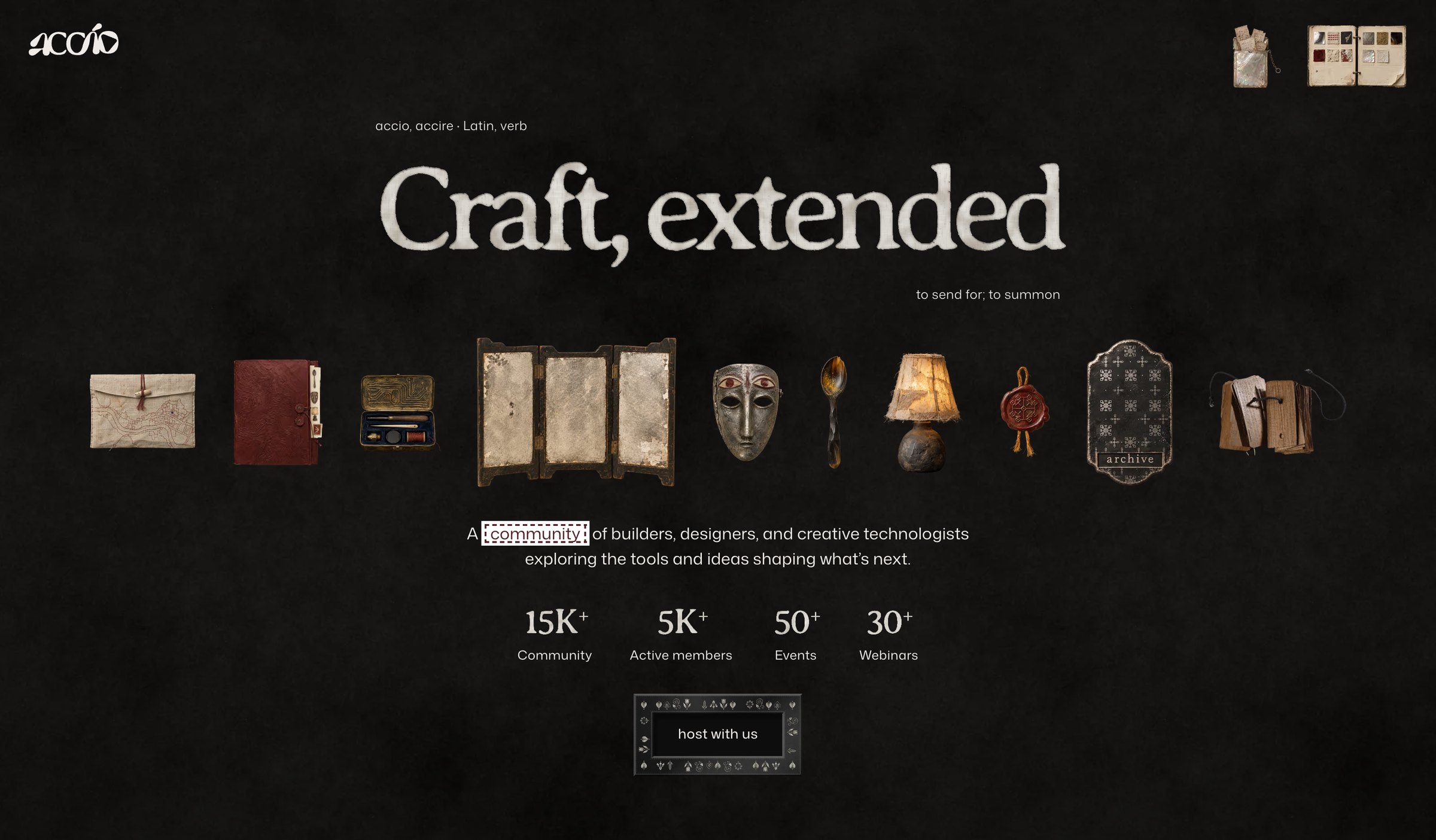
The homepage is a specimen table: the objects on the alloy, each one a way in. Scrolling folds the table into the dock, which is the site’s menu; each cell opens one screen.
Inner pages are one screen too. The ground holds still and only the pieces on it move.
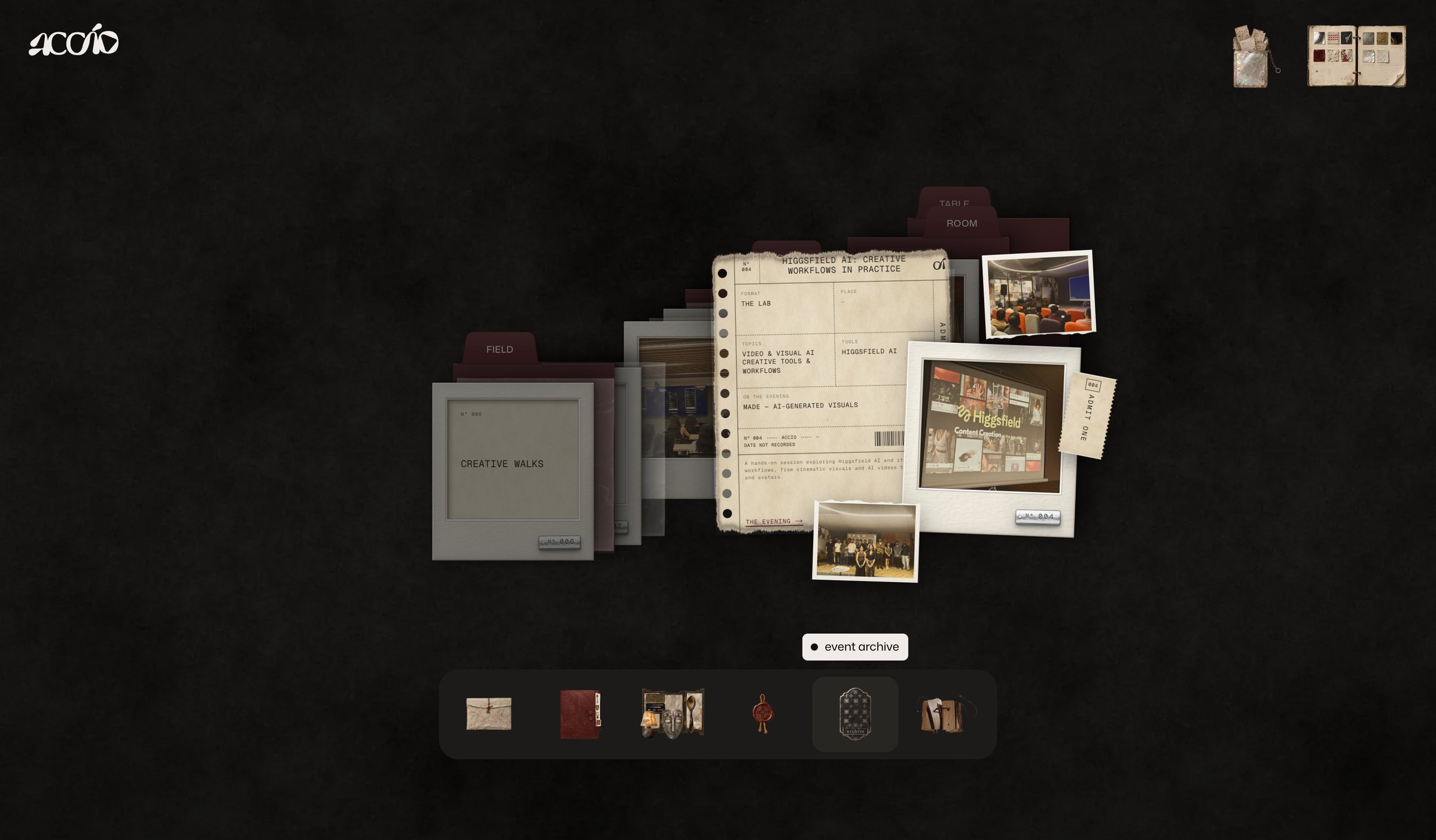
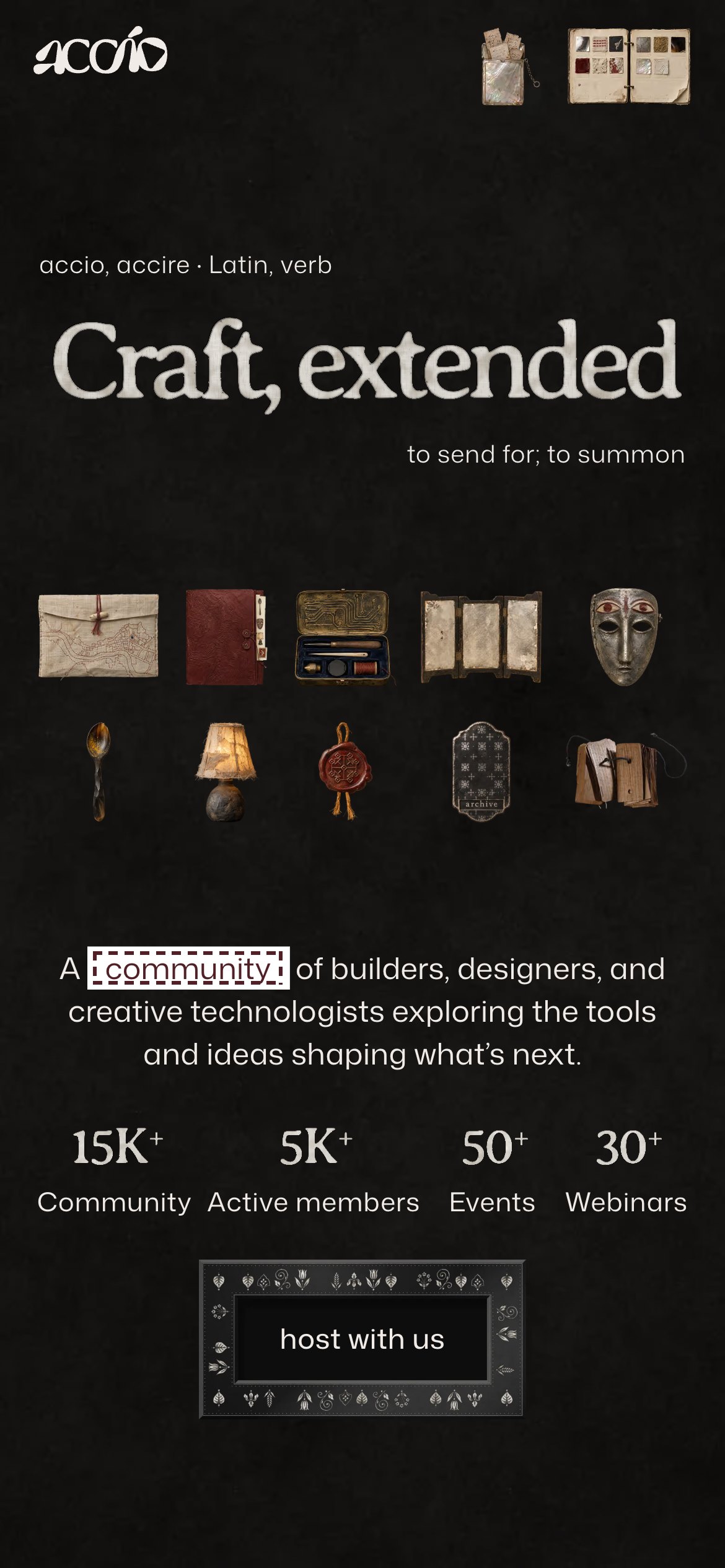
The screens
Upcoming: the next event as one card that opens into its record, prints and a calendar.
Partners: a leporello that opens under the scroll or a drag. Host: the enquiry, one question at a time. Brand kit: these pages, side by side.
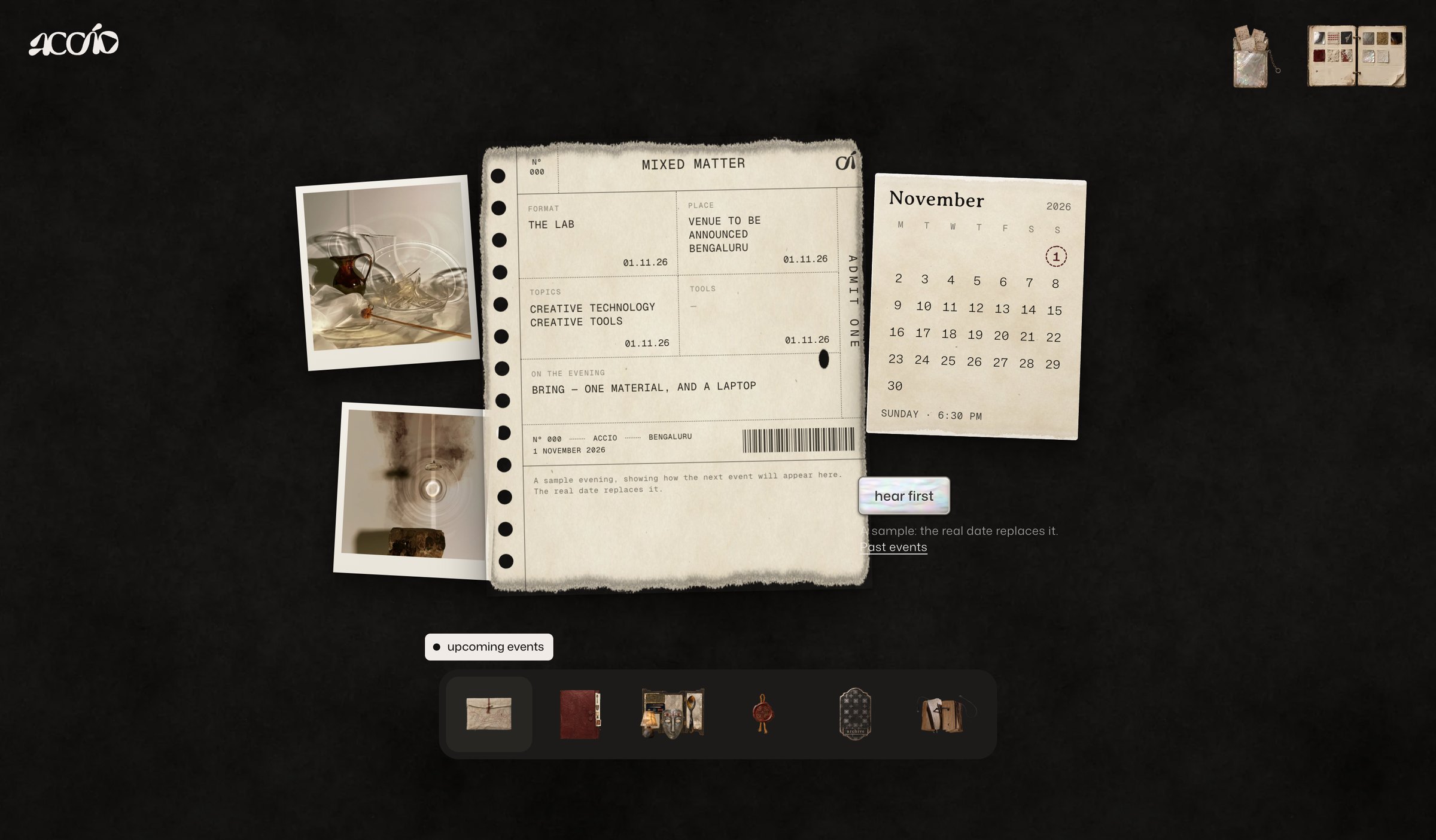
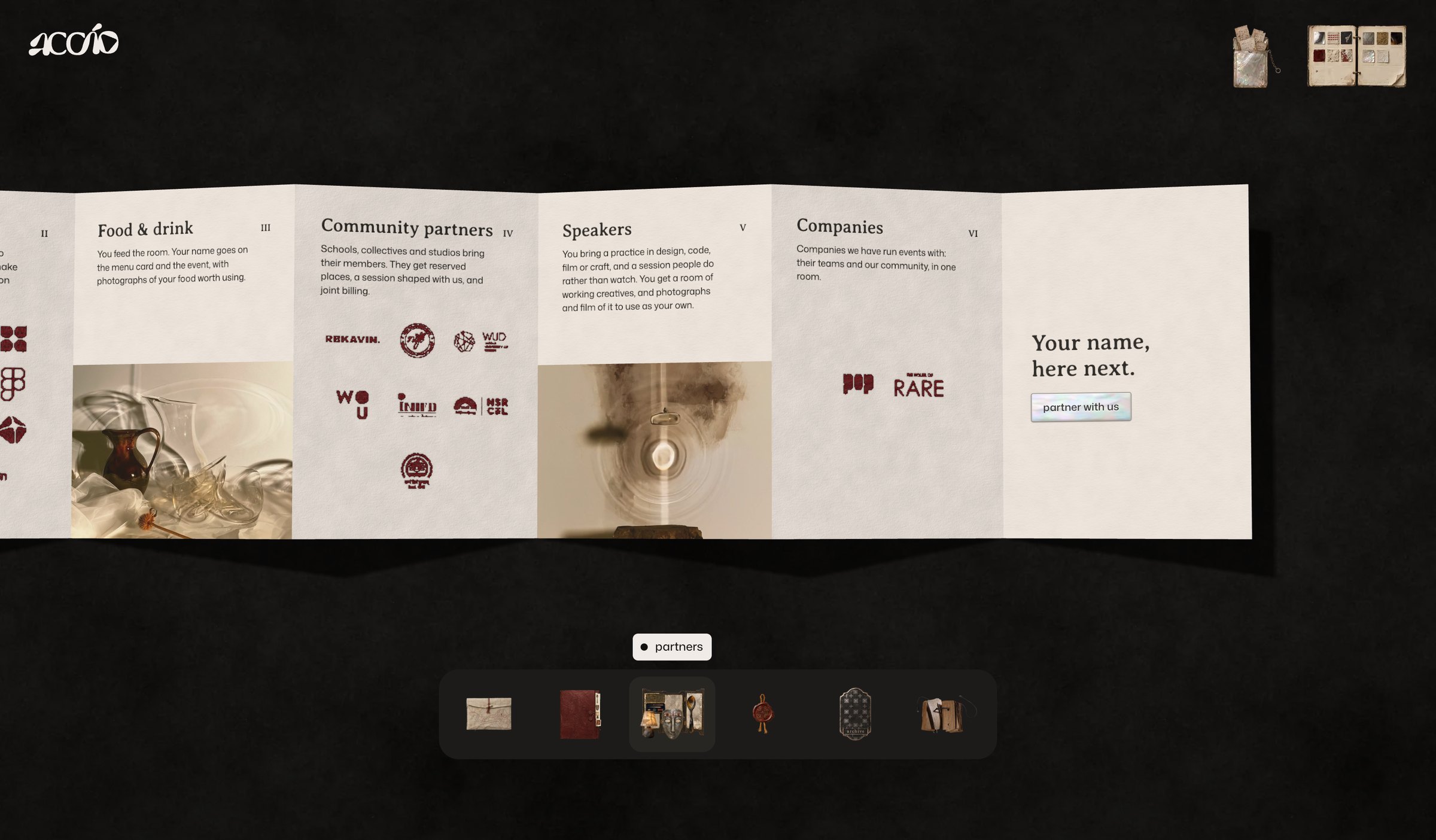
Invitation
Printed matter is parchment. The event’s name grows its own symbol, stitched while the event is upcoming, and its border runs along the foot. Details in brackets are placeholders.
[Event name]
Assets
The press kit, built from data/ and out/ exactly as pnpm kit:build builds it.
Still to come: logo/, hallmarks/, usage.pdf. Nothing stands in for a missing file.
- accio-press-kit.zipEverything below, in one archive2.0 MB
- colour/swatches.svgThe palette sheet44 KB
- colour/accio.aseAdobe swatch exchange678 B
- colour/colours.csvEvery colour as a table2 KB
- usage.pdfClear space and minimum sizes2 KB
- README.txtWhat is in the kit, and the licences2 KB
- type/specimen.pdfAccio Sans specimen1.4 MB
- AccioSans[wdth,wght].ttfDesktop font, variableTTF
- AccioSans.woff2Web font, variableWOFF2
- AveriaSerifLibre-Regular.ttfDisplay font, desktop (Light and Bold in the press kit)TTF
- AveriaSerifLibre-400.woff2Display web fontWOFF2
- wordmark-oxide.svgWordmark, oxideSVG
- wordmark-parchment.svgWordmark, parchmentSVG
- icon-mark-oxide.svgIcon mark, oxideSVG
- icon-mark-parchment.svgIcon mark, parchmentSVG
- tokens.cssEvery token as CSS variablesCSS